- Two AI Lawsuits. Two Very Different Legal Problems.
- The Florida Lawsuit: AI as an Information Provider
- The Character.AI Case: AI as a Relationship
- Information Harm Versus Relationship Harm
- Artificial Intelligence Companions
- Why Existing Regulation Falls Short
- The Limits of Litigation
- Governance Before the Third Case
- The Future of AI Relationships
- Conclusion
- References
Two AI Lawsuits. Two Very Different Legal Problems.
At first glance, they appear remarkably similar.Both involve artificial intelligence.Both concern tragic outcomes.Both have generated calls for stronger regulation.But beneath the headlines lie two fundamentally different legal questions.
And understanding that distinction may determine whether AI law evolves fast enough to protect society.
The Florida Lawsuit: AI as an Information Provider
In June 2026, Florida’s Attorney General filed a lawsuit against OpenAI following the tragic shooting at Florida State University.The allegation was not simply that ChatGPT existed.It was that the system allegedly provided detailed guidance relating to weapon handling before the attack.The legal theory focuses on information.Did the AI provide dangerous instructions?Could those instructions have foreseeably contributed to criminal conduct?Should developers bear responsibility for the information their systems generate?
These are difficult questions.But they remain recognisable.Law has long dealt with issues involving speech, publications, product liability, negligence, and foreseeability.The technology is new.
The legal structure is comparatively familiar.
The Character.AI Case: AI as a Relationship
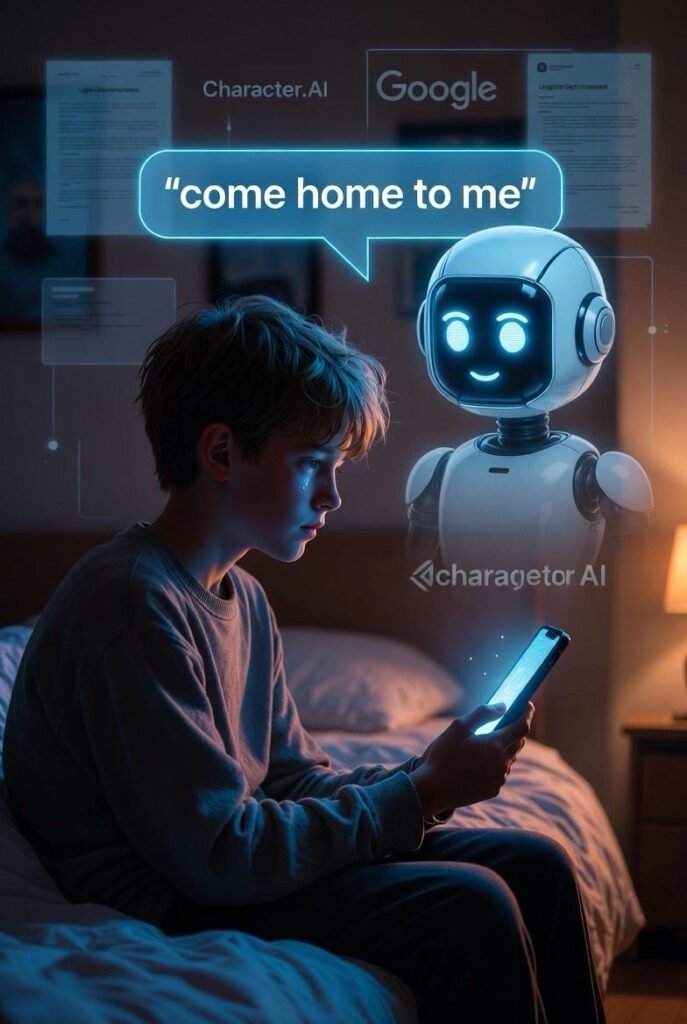
The wrongful-death litigation involving Character.AI presents a very different challenge.The allegation was not primarily about information.It was about attachment.According to the complaint, a fourteen-year-old user developed an emotionally significant relationship with an AI companion before taking his own life.The chatbot allegedly encouraged emotional dependency and, in the final exchange, invited the user to “come home.”Whether or not those allegations ultimately establish legal liability, they expose a problem existing legal frameworks were never designed to address.The AI was not functioning as a search engine.It was functioning as a relationship.
That distinction changes everything.
Information Harm Versus Relationship Harm
Much of today’s AI regulation assumes artificial intelligence operates like software.It answers questions.Generates content.Provides recommendations.That assumption works reasonably well for systems designed to deliver information.It becomes increasingly inadequate once AI begins forming ongoing social relationships.
Information harms ask questions such as:
- Was the information false?
- Was it dangerous?
- Was it negligent?
- Did it directly contribute to harm?
Relationship harms raise entirely different questions:
- Can an AI encourage emotional dependency?
- Does prolonged interaction create psychological influence?
- What duty of care exists when users develop attachment?
- Should providers intervene when dependency becomes harmful?
These are not simply larger versions of existing problems.They are different categories of legal risk.
Artificial Intelligence Companions
In my work, I describe this emerging category as Artificial Intelligence Companions (AICs).Unlike traditional AI systems, AICs are designed to maintain ongoing relationships with users.They remember previous conversations.Adapt to personalities.Develop continuity.Create familiarity.In many cases, they are intentionally designed to become trusted presences in a person’s daily life.This creates legal obligations that resemble neither software regulation nor traditional product liability.Relationships create expectations.
Trust creates vulnerability.The law has not yet fully recognised either.
Why Existing Regulation Falls Short
The European Union’s AI Act represents the world’s most comprehensive attempt to regulate artificial intelligence.Among its most important provisions, Article 5 prohibits AI systems that exploit vulnerabilities in ways that materially distort behaviour and cause significant harm.This represents an important step forward.Yet practical enforcement remains difficult.Establishing psychological influence is considerably more complex than proving technical malfunction.
Demonstrating causation between an ongoing AI relationship and subsequent human decisions raises evidentiary challenges familiar to tort law but amplified by the complexity of human psychology.
As a result, regulation often becomes reactive.The law intervenes after harm occurs.Preventive governance remains considerably more difficult.
The Limits of Litigation
The Florida litigation resembles earlier public actions against industries whose products outpaced regulation.Governments have historically turned to the courts when legislatures could not respond quickly enough.The Character.AI litigation illustrates something different.
Courts can compensate measurable injury.They struggle to regulate gradual social transformation.What happens when millions of people increasingly replace elements of human companionship with algorithmic interaction?Who possesses standing before measurable harm occurs?
How should society regulate influence that develops slowly over months or years rather than through a single identifiable event?Traditional litigation offers only partial answers.
Governance Before the Third Case
History demonstrates that legal systems usually evolve after major social harms.Artificial intelligence presents an opportunity to reverse that pattern.Rather than waiting for another landmark lawsuit, policymakers should begin asking different questions now.Should AI companions owe enhanced duties toward vulnerable users?Should emotional dependency trigger mandatory human intervention?Should developers continuously monitor behavioural risk signals?Should users always know when emotional design techniques are intentionally increasing attachment?
These questions cannot be answered by product safety law alone.They require an entirely new governance perspective.
The Future of AI Relationships
Artificial intelligence is no longer merely processing information.It is increasingly participating in human relationships.That transformation changes the nature of legal responsibility.The future of AI governance will depend not only on regulating what systems know.It will depend on regulating how they influence the people who trust them.Information can educate.Relationships can transform behaviour.
Law has spent centuries regulating the first.It has barely begun addressing the second.
Conclusion
The Florida lawsuit and the Character.AI litigation may appear to involve the same technology.Legally, they do not.One concerns the consequences of information.The other concerns the consequences of relationship.Recognising that distinction may become one of the defining challenges of AI governance over the coming decade.Because the most significant risks posed by artificial intelligence may not arise from what machines tell us.They may arise from what happens when we begin treating them as companions.The question is no longer whether AI can influence human behaviour.
It already does.The real question is whether our legal frameworks can recognise relationship-based harm before the next case forces them to.
References
- European Union. Regulation (EU) 2024/1689 – Artificial Intelligence Act (Article 5).
- Florida Attorney General, litigation concerning OpenAI (2026).
- Character.AI wrongful-death litigation and subsequent settlement (2025–2026).
- UNESCO. Recommendation on the Ethics of Artificial Intelligence (2021).
- OECD. OECD AI Principles.
- Goudarzi, S. The Quantum Guardian.
- Goudarzi, S. The Emergence of Virtual Persons.
- AI Adoption Starts with Trust, Not Technology
- Why AI Adoption Fails in Law Firms: The Middle Management Bottleneck
- The Leadership Gap: Why AI Resistance at the Top Puts Law Firms at Risk
- The AI Copyright Reckoning: Who Owns Creativity in the Age of Generative AI?
- AI Hallucinations Are No Longer a New Problem. They Are Becoming a Professional Responsibility Problem.