- The NIS2 Case Matters Because Enforcement Escalated
- This Is Bigger Than NIS2
- The AI Act Is Already Moving Into Its Transparency Phase
- Don't Confuse Different Regulatory Timelines
- The Multi-Jurisdiction Problem
- The "Slow Enforcement" Strategy Is a Bad Strategy
- What This Means for AI Governance
- Compliance Is Becoming an Operational Capability
- The Governance Advantage
- The Real Signal From Brussels
- Conclusion
For years, organisations across Europe have become accustomed to a familiar pattern:A regulatory deadline arrives.Implementation takes longer than expected.National legislation moves slowly.Enforcement appears inconsistent.
And companies learn to treat the deadline as something that can perhaps be managed later.The European Commission’s latest action on the NIS2 Directive suggests that strategy is becoming increasingly risky.
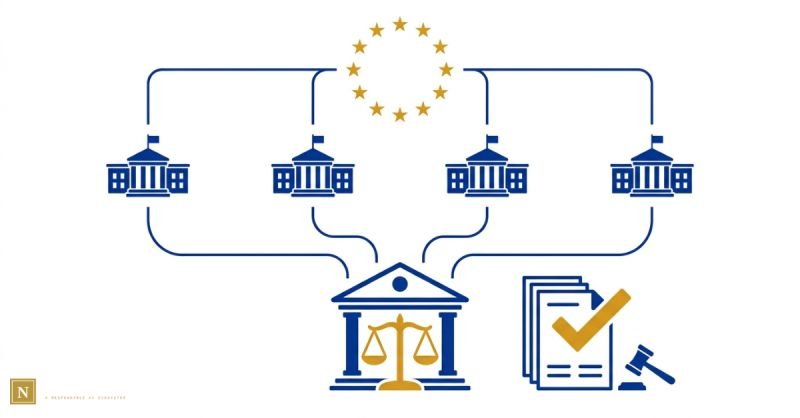
On 8 July 2026, the Commission referred Ireland, Spain, France and the Netherlands to the Court of Justice of the European Union for failing to notify full national transposition of NIS2. The Directive required Member States to transpose it by 17 October 2024. The Commission had already issued formal notices in November 2024 and reasoned opinions in May 2025.This is more than another cybersecurity compliance story.
It is a signal about how the EU is approaching digital regulation.
The NIS2 Case Matters Because Enforcement Escalated
NIS2 is designed to strengthen cybersecurity requirements across critical sectors, covering entities operating in areas such as healthcare, energy, transport and the public sector.The important point is not simply that four Member States were late.It is what happened next.The Commission did not simply issue another reminder.
It moved the matter to the Court of Justice of the European Union and requested financial sanctions consisting of a lump sum and daily penalties until complete transposition is notified.That changes the compliance calculation.
“We’re still working on it” becomes a much less comfortable position when the next step is litigation at EU level.
This Is Bigger Than NIS2
The lesson for organisations operating across Europe is not that NIS2 and the AI Act are identical.They are not.The regulatory structures, obligations, responsible authorities and enforcement mechanisms differ.
But there is a broader pattern worth watching:EU digital regulation is moving from policy announcements toward implementation, supervision and enforcement.
That matters for organisations dealing with:
- cybersecurity;
- artificial intelligence;
- data protection;
- digital resilience;
- technology vendors;
- and increasingly interconnected regulatory obligations.
The assumption that European digital regulation will remain largely theoretical is becoming harder to defend.
The AI Act Is Already Moving Into Its Transparency Phase
The timing is particularly relevant for AI governance.The European Commission’s Article 50 guidelines confirm that the AI Act’s transparency obligations apply from 2 August 2026.These obligations cover specific situations, including informing people when they are interacting with certain AI systems and requirements concerning the marking or labelling of certain AI-generated or manipulated content.
The Commission has also published guidance explaining the scope and practical application of these obligations.
This is important because it demonstrates that the AI Act is no longer simply something organisations need to prepare for in the abstract.Parts of it are now operational.
Don’t Confuse Different Regulatory Timelines
There is an important nuance here.The NIS2 infringement proceedings do not prove that the European Commission will enforce the AI Act in exactly the same way or according to the same timetable.That conclusion would go too far.
What the NIS2 case demonstrates is something more general:
The Commission is willing to escalate digital-regulation implementation failures when Member States do not meet their obligations.
That should influence how companies think about their own compliance posture.
The relevant question is not:
“Will Brussels enforce this tomorrow?”
It is:
“What happens if enforcement becomes more serious than we expected?”
A robust compliance programme should already have an answer.
The Multi-Jurisdiction Problem
For companies operating across several EU markets, another issue becomes increasingly important.National implementation can differ.Different regulators may have different procedures.Different Member States may move at different speeds.And organisations may find themselves dealing with multiple layers of EU and national requirements.
That makes a fragmented compliance strategy increasingly dangerous.A company operating in France, Ireland, Spain and the Netherlands, for example, cannot simply assume that because an EU directive exists, its practical obligations will look identical in every jurisdiction.
The regulatory map needs to be understood at both levels:EU framework + national implementation.
The “Slow Enforcement” Strategy Is a Bad Strategy
Some organisations effectively build their compliance strategy around enforcement probability.
They ask:
“How likely are we to be investigated?”
“Which regulator is actually active?”
“What happens if we wait?”
“Are competitors doing anything?”
That approach may appear commercially rational in the short term.But it creates strategic exposure.Regulation is not static.Enforcement priorities change.Political pressure changes.Technology changes.Regulators gain resources and experience.
And once a company is already under investigation, it is too late to begin building the governance framework it should have had from the beginning.
What This Means for AI Governance
For companies deploying AI in Europe, the lesson is straightforward.Do not build compliance around the assumption that enforcement will remain fragmented or slow.
Instead, establish a framework that allows you to demonstrate:
What AI systems you use
You need visibility across the organisation.
Why you use them
Each system should have a defined purpose.
What risks they create
Risk should be assessed according to the actual use case.
What controls exist
Policies, technical safeguards and human oversight should be documented.
Who is responsible
There should be identifiable ownership for AI systems and associated risks.
How compliance can be demonstrated
Documentation matters when regulators begin asking questions.
Compliance Is Becoming an Operational Capability
This is perhaps the biggest shift.Compliance used to be treated by some organisations as a legal document sitting somewhere in the organisation.Digital regulation is making that model increasingly inadequate.Cybersecurity compliance requires technical controls.AI compliance requires understanding systems and workflows.
Data protection requires operational processes.Digital resilience requires ongoing testing and monitoring.The result is that compliance increasingly becomes part of how the organisation operates, rather than simply what its legal team writes.
The Governance Advantage
There is also a positive side to this.Organisations that establish strong governance early can gain an operational advantage.
They know:
which systems exist,
which regulations apply,
which risks matter,
who owns each risk,
and what evidence demonstrates compliance.
That makes future regulatory change easier to absorb.Instead of rebuilding the organisation every time a new requirement arrives, the company updates an existing governance infrastructure.That is much more sustainable.
The Real Signal From Brussels
The NIS2 referrals should not be interpreted as proof that the EU will automatically pursue every future compliance issue through the courts.But they should be interpreted as a warning against complacency.
The European regulatory environment is increasingly characterised by:deadlines → implementation → monitoring → infringement → enforcement.
The transition from the first stage to the last is becoming more visible.And organisations that have built their strategy around regulatory delay may eventually discover that delay was never a compliance strategy.It was simply a gamble.
Conclusion
The European Commission’s referral of Ireland, Spain, France and the Netherlands to the Court of Justice over NIS2 is significant because it demonstrates that failure to implement EU digital rules can eventually escalate beyond reminders and deadlines.At the same time, the AI Act is entering a new phase, with Article 50 transparency obligations applying from 2 August 2026.The two regulatory regimes should not be treated as identical.
But they point toward the same strategic lesson:
Don’t build your compliance programme around the assumption that enforcement will remain slow, fragmented or theoretical.
Build it around the assumption that eventually someone may ask:
Show me how you comply.
And make sure you can.